
Along a short stretch of Boston’s downtown waterfront, Rowes Wharf, India Wharf, and Long Wharf trace three chapters in the harbor’s history. Rowes Wharf once linked ferry passengers to a railroad in East Boston. India Wharf housed warehouses designed by Charles Bulfinch. At Long Wharf, ferries still depart near buildings that reflect the area’s maritime past.
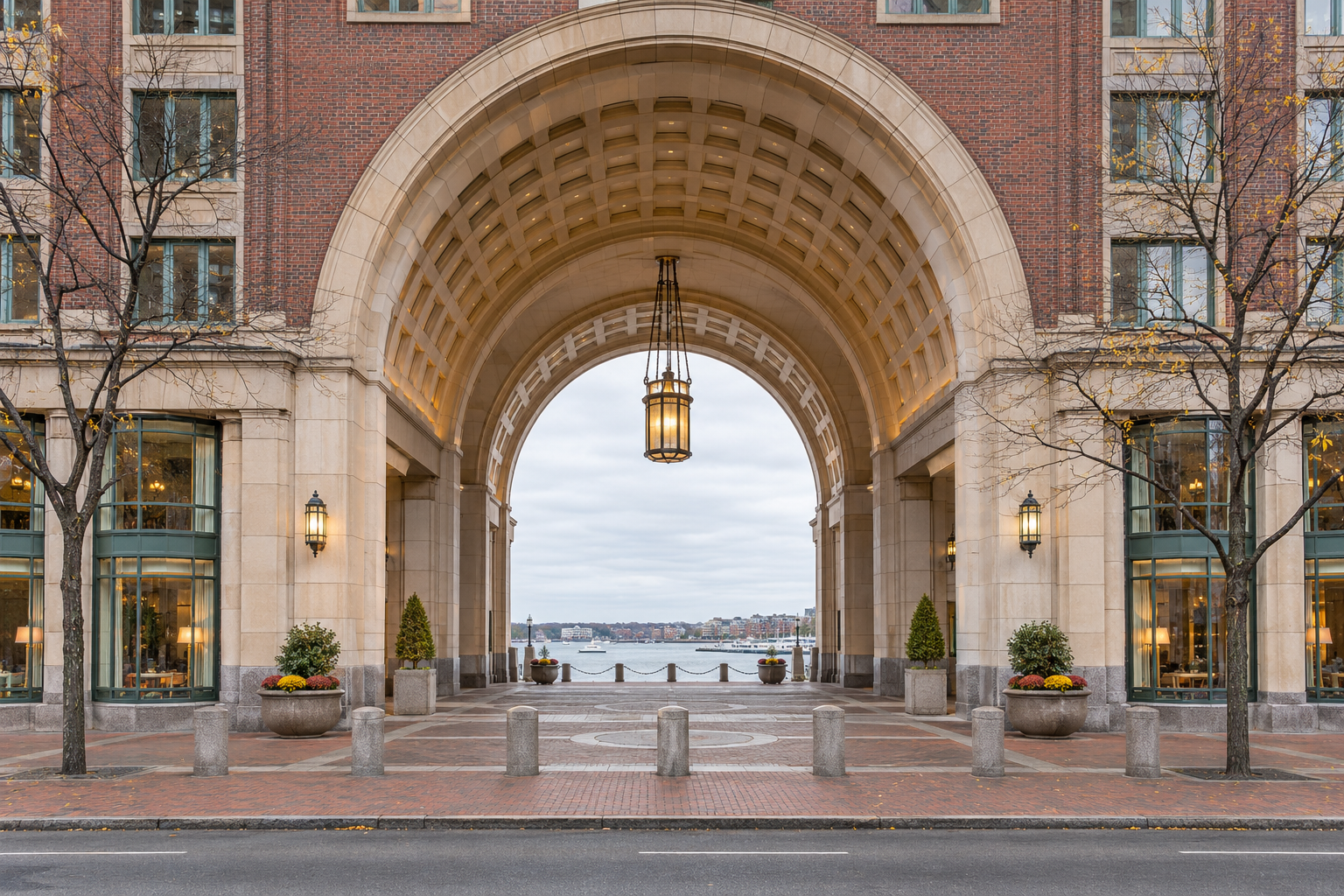
Rowes Wharf
The central arch at the Boston Harbor Hotel marks the entrance to Rowes Wharf from Atlantic Avenue. From the street, the arch frames a narrow view of the harbor. On the other side, the waterfront opens up in both directions. The design gives the wharf a clear entrance from downtown while keeping the water visible from the street.
Long before the hotel opened, Rowes Wharf was a departure point for passengers traveling across the harbor. By 1875, ferry service connected the wharf to the Boston, Revere Beach and Lynn Railroad in East Boston. The ferry and railroad operated as parts of the same trip, linking downtown Boston with communities farther up the coast.
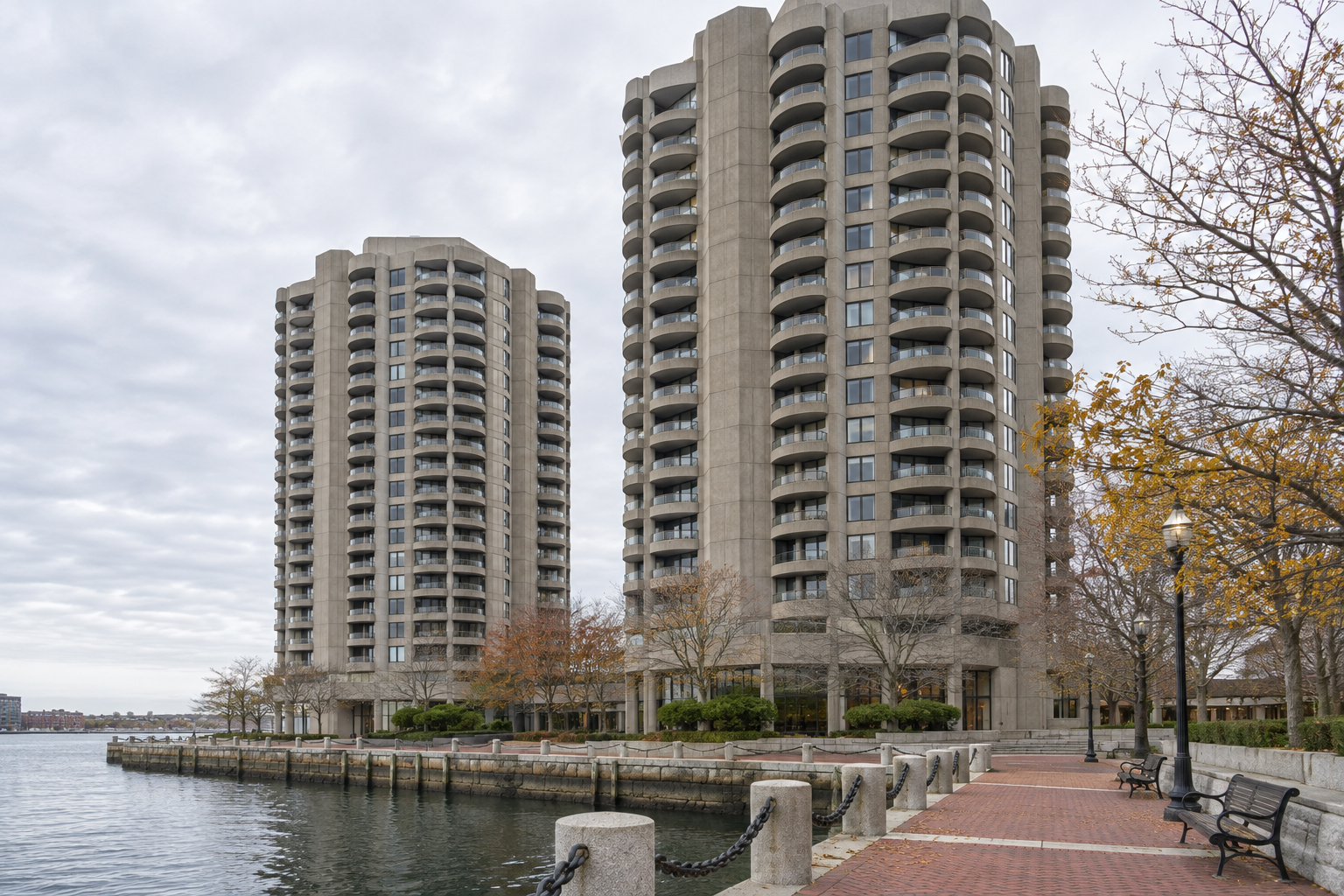
India Wharf
Harbor Towers stands on the former site of India Wharf’s warehouses, designed by Charles Bulfinch and built in 1807. More than a century and a half later, the site became part of Boston’s effort to redevelop its downtown waterfront. The twin residential towers, designed by Henry Cobb of I. M. Pei & Partners, were completed in 1971.
The towers’ design is easiest to read from the waterfront promenade. Recessed windows cast shadows across the concrete façades, while curved balconies project beyond the grid. Those balconies give the towers a recognizable outline from across the harbor and provide private outdoor space for residences such as Unit 34G.
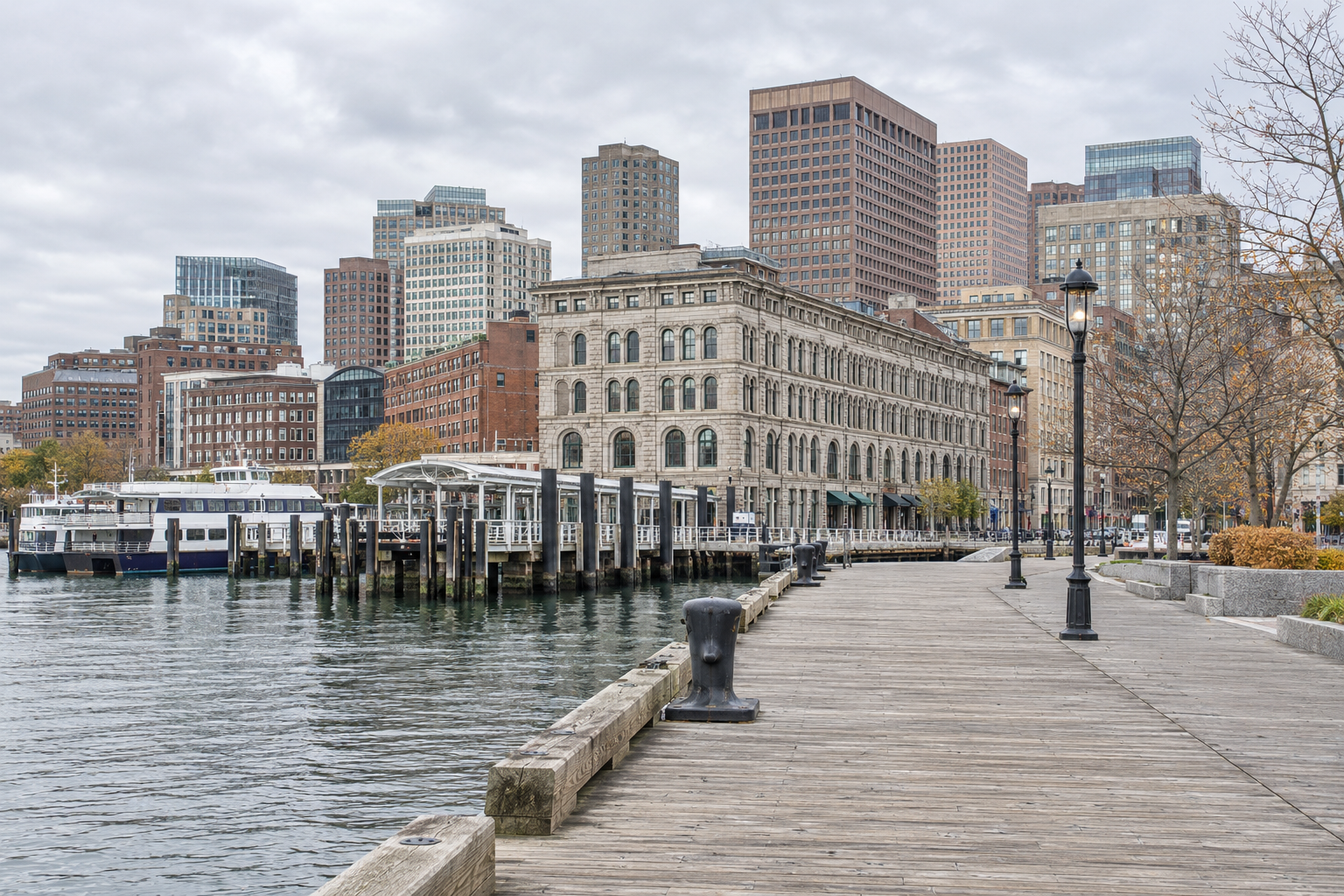
Long Wharf
Farther north, Long Wharf extends into the harbor beside the New England Aquarium. The wharf and the Custom House Block are recognized together as a National Historic Landmark. The old commercial buildings and the active ferry docks sit within the same stretch of waterfront, where the wharf still serves as a departure point.
Near the outer end of the pier, the view back toward Atlantic Avenue gives a clear sense of the wharf’s position. From there, the downtown buildings sit behind the pier, with open water on either side. It’s a perspective that’s easy to miss from the streets around the aquarium.
For a view of this stretch of waterfront from above, explore 85 East India Row, Unit 34G, a one-bedroom residence at Harbor Towers with a private balcony overlooking Boston Harbor and the downtown skyline.